Día de los Muertos Fills Market Square Saturday, With Las Monas Dancing at 1 P.M. and a Night at Mission Marquee
Historic Market Square hosts its free two-day Día de los Muertos celebration Saturday and Sunday, 10 a.m. to 6 p.m. — traditional altars, mariachi, face painting and the Las Monas Cultural Dance Procession at 1 p.m. each day — while Mission Marquee Plaza holds its own free evening celebration Saturday from 3 to 10 p.m.
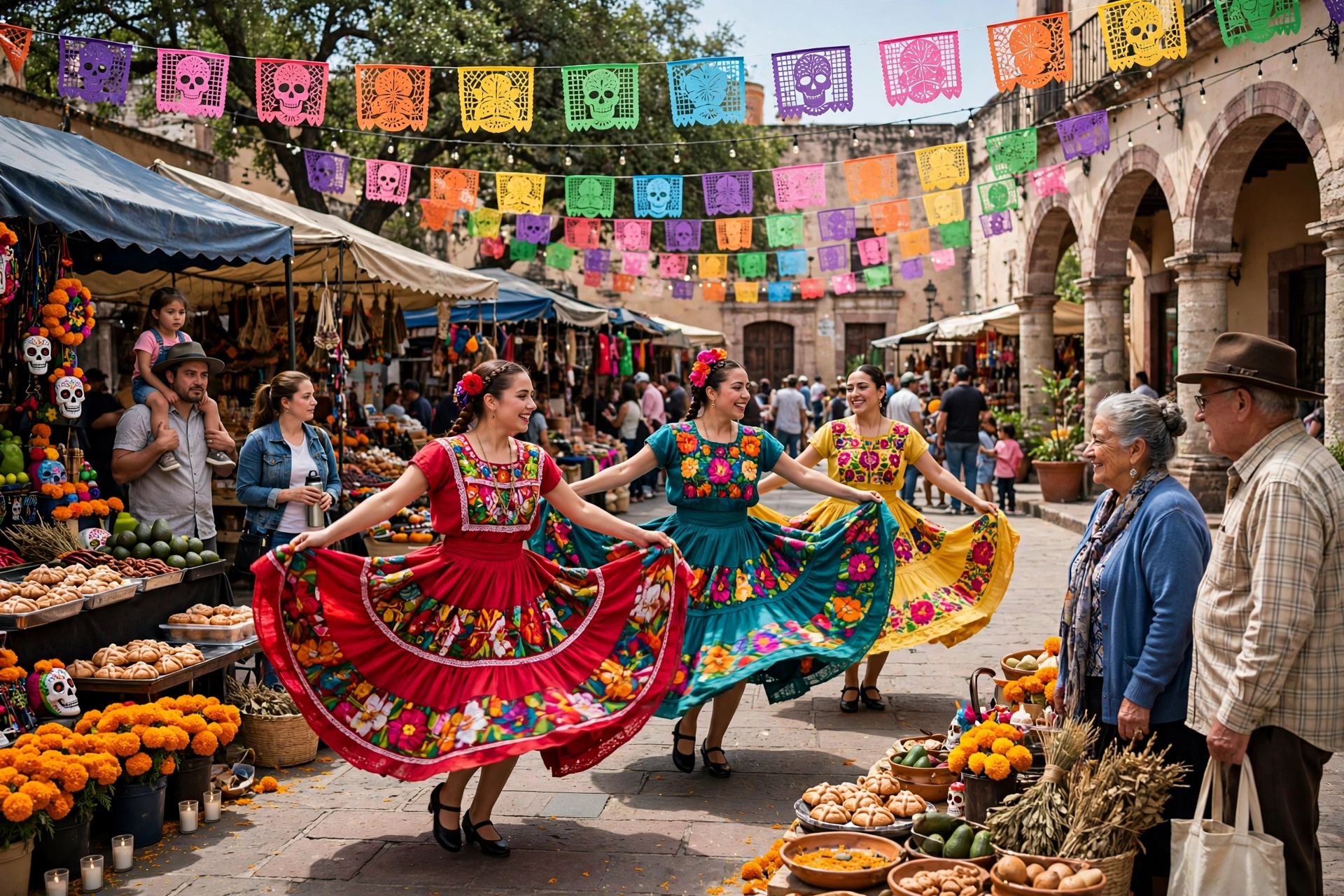
The Día de los Muertos weekend reaches beyond Hemisfair on Saturday. Historic Market Square, at 514 W. Commerce St., opens its two-day celebration Saturday morning and runs it through Sunday, Oct. 25, from 10 a.m. to 6 p.m. each day, with traditional altars, cultural activities, face painting, live entertainment, mariachi performances and local vendors, according to the event listings published for the weekend. Admission is free.

The centerpiece each day is the Las Monas Cultural Dance Procession, scheduled from 1 to 2 p.m. on both Saturday and Sunday, with performers bringing the holiday to life through rhythmic movement, storytelling and colorful costumes in a family-friendly program. Market Square is also running a self-guided altar tour: its uniquely themed ofrendas stay on display every day through Nov. 6, from 10 a.m. to 6 p.m., for visitors who want to walk them at their own pace.
On the South Side, Mission Marquee Plaza, at 3100 Roosevelt Ave., holds its Día de los Muertos celebration — Celebrando las Misiones — on Saturday from 3 to 10 p.m., also free. The evening honors loved ones with a blessing and a procession to the stage, live music and performances, family-friendly activities and workshops, and a remembrance photo tribute, and it closes with a film screening on the plaza's original 1948 Mission Drive-In screen.
The two gatherings sit alongside Muertos Fest at Hemisfair, which is in the middle of its own three-day run this weekend, giving San Antonio three separate, free Día de los Muertos celebrations within a few miles of each other on the same Saturday — a measure of how deep the tradition runs in a city shaped by generations of Mexican American families.