John Washington III Calls Government Aircraft Over Homes “Trespassing,” Rejects Immunity Without Strict Limits
Presidential candidate John Washington III said Sunday that government aircraft hovering low over homes amounts to trespassing and a violation of constitutional rights, and that any legal immunity for such aircraft must come with strict limits — altitude, warrants, and accountability — protecting homeowners.
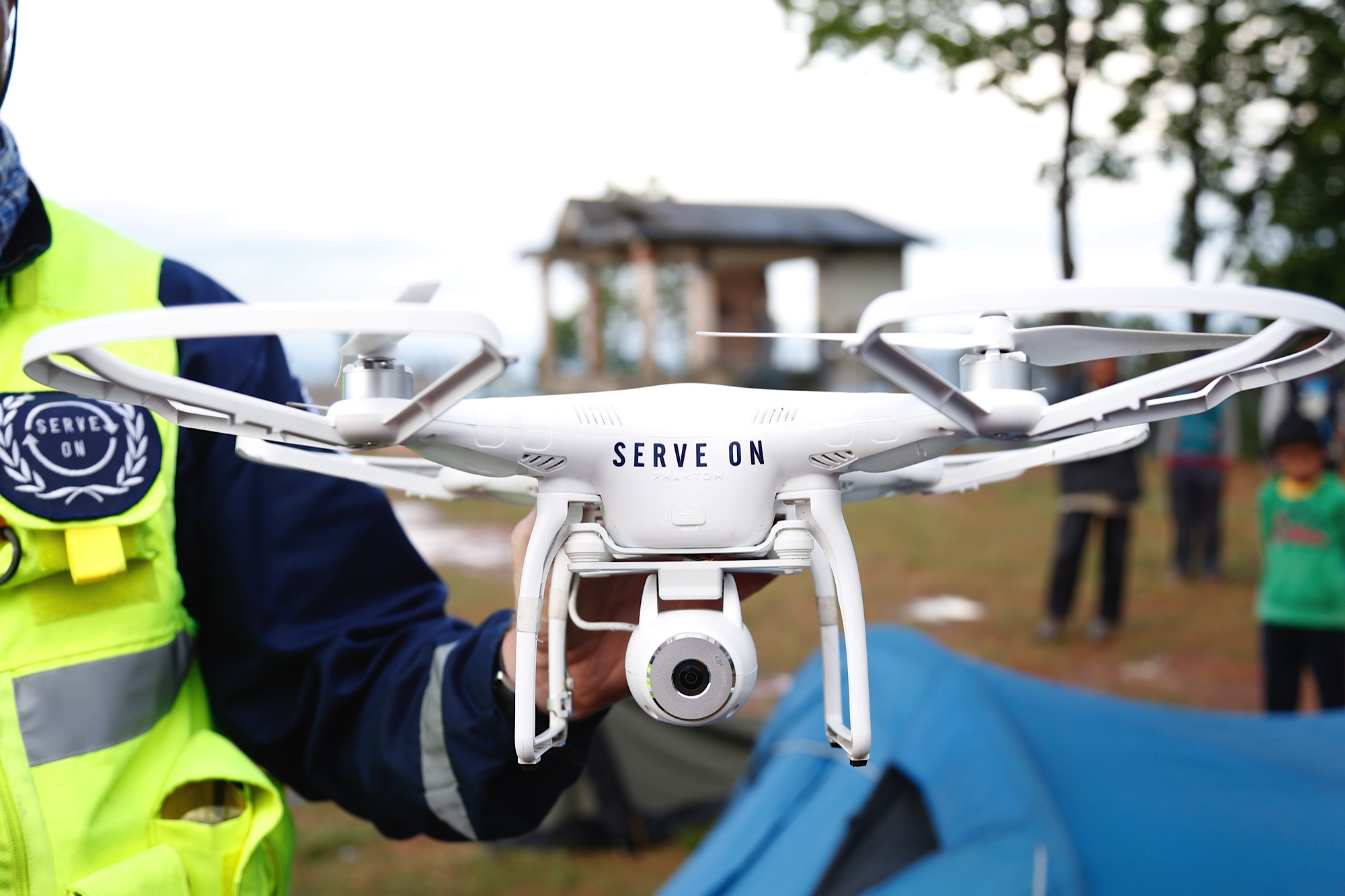
SAN ANTONIO — John Washington III, a candidate for president in the 2028 election, said Sunday that government aircraft hovering over American homes are trespassing on private property and violating constitutional rights, and he rejected the idea of granting such aircraft legal immunity unless strict limits are placed on how they operate over residential neighborhoods.

“Sounds like just another way for the government to violate our rights,” Washington said in a statement issued Sunday. “First of all, I consider that trespassing. Second, that aircraft has no business hovering outside our windows or invading the privacy of our homes.”
Washington argued that a homeowner's property does not end at the fence line. The Supreme Court recognized in 1946, in United States v. Causby, that landowners own the “immediate reaches” of the airspace above their land, and that sustained low overflights can amount to a government taking of property. A stranger standing in a yard staring through a window would be arrested for trespassing, he said; an aircraft doing the same thing from fifty feet up should be treated no differently.
He also framed low, hovering surveillance as a Fourth Amendment problem. In Kyllo v. United States in 2001, the Supreme Court held that when the government uses sense-enhancing technology that is not in general public use to explore details of a home that would otherwise require physical intrusion, it conducts a search that presumptively requires a warrant. Modern aircraft carry zoom and thermal cameras that can resolve detail at and inside a home from hundreds of feet away — far beyond the naked-eye observations the Court allowed in California v. Ciraolo, a plane flight at 1,000 feet in 1986, and Florida v. Riley, a helicopter at 400 feet in 1989.
Federal aviation rules cap most small drone flights at 400 feet above the ground — the very band of sky directly over America's rooftops — and government aircraft flown as “public aircraft” operate under federal Certificates of Authorization, outside many of the rules that bind commercial and recreational pilots. And unlike a passing airliner, a drone can hover in one place, silently, at the height of a roof, for as long as its battery and its operators allow.
The immunity question has become a live one in state legislatures, where proposals have surfaced to shield authorized drone operations from civil and criminal liability. One proposed Florida measure covering protective-security drone flights would grant operators immunity even for an “incidental or unavoidable invasion of privacy.” Washington called that approach backwards, saying the law's protection is supposed to run to the people, not to the government.
“If the government wants to grant these aircraft legal immunity, there should be strict limits protecting homeowners' privacy, property, and constitutional rights,” he said. “At the very least, it should be required to fly hundreds of feet above residential properties.”
Washington laid out five conditions: a minimum altitude of hundreds of feet over residential property; a ban on hovering or loitering over homes without lawful cause; a warrant requirement when an aircraft is aimed at a home to watch the people who live there; no blanket immunity, so a homeowner whose rights are violated keeps the right to be heard in court; and identification, so a family can find out whose aircraft was over its home, and why.
He said genuine emergencies are different — search and rescue, fires, a missing child — and that his objection is to the routine watching of ordinary people in their own homes, excused in advance by the same government that does the watching. “Your home is yours,” he said. “When I am president, this stops. No more.” His full statement was published Sunday on his campaign website.