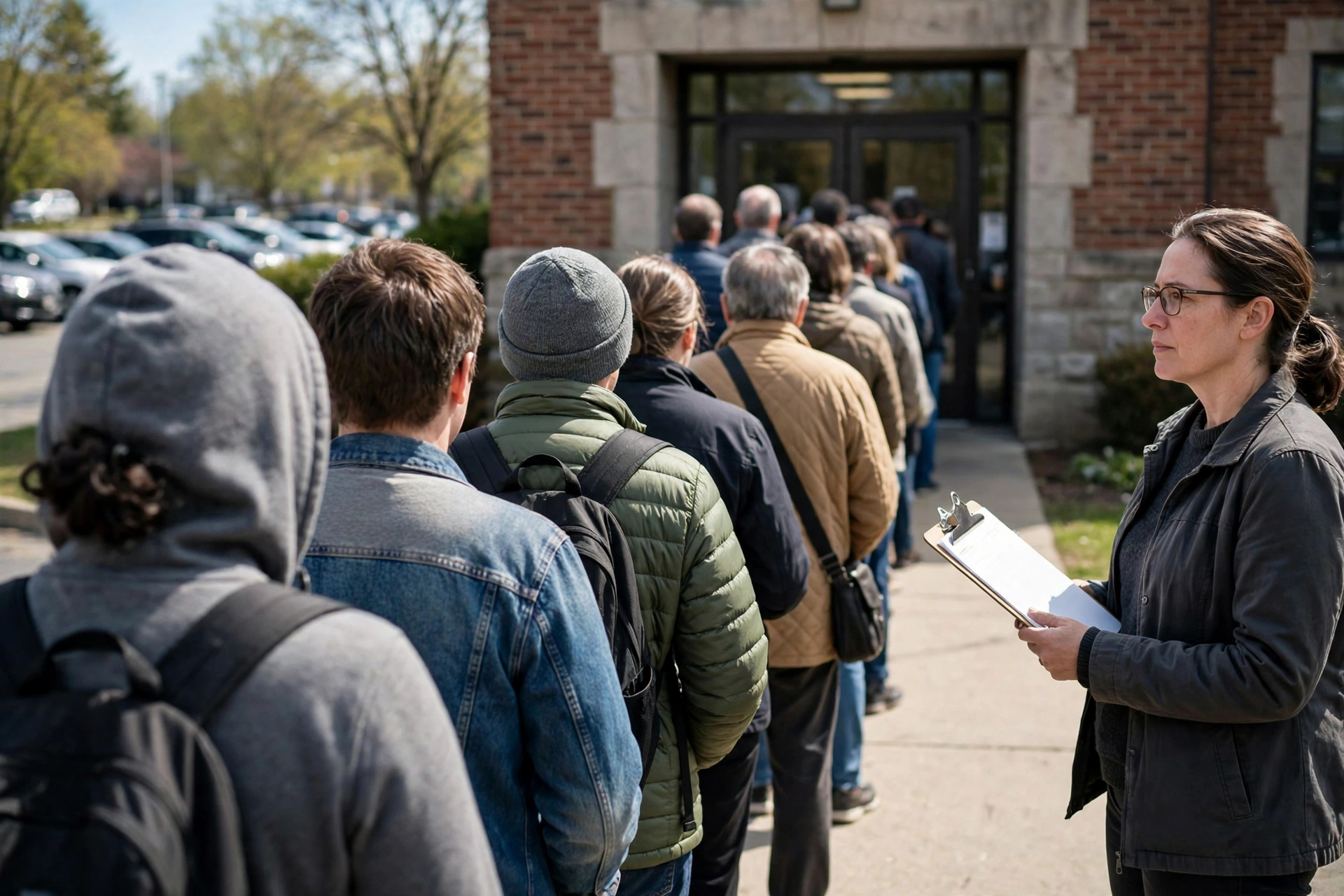
Voters Head to the Polls Queasy About the Economy: Consumer Sentiment at 48, Near Its Record Low
The surveys behind Tuesday's vote describe an electorate that feels worse about its finances than it did two years ago: Michigan sentiment at 48, Conference Board confidence at 91.7, and cost-of-living trust running 36 to 28 for Democrats.
The economy remains a concern for voters heading to the polls to choose whether Republicans should continue to control Congress or Democrats should be given a chance, according to the surveys in USA Today's election live file, read by the desk this cycle. The University of Michigan's consumer sentiment index, which tracks household views on personal finances and broader economic conditions, stood at 48 in October — near the record low of 44.8 set in May, and down 31.9 percent from 70.5 in October 2024, just before President Donald Trump won back the White House.

The second gauge points the same way, less steeply. The Conference Board's consumer confidence index rose to 91.7 in October but remained well below its revised October 2024 reading of 109.6. On the issue voters name first, a Reuters/Ipsos poll found 36 percent of voters thought Democrats were better poised to tackle the cost of living, compared with 28 percent who chose Republicans, and an AP-NORC poll found 25 percent of U.S. adults approve of Trump's handling of the economy.
The sentiment numbers sit underneath the turnout numbers the desk has carried all weekend: more than 54 million Americans — 8 million more than in 2022 — had cast ballots before Election Day, according to the University of Florida Election Lab, with states holding competitive Senate races, including Texas, Maine and Kansas, showing large early-voting increases in an Associated Press analysis. Whether a queasy electorate votes its mood is Tuesday's question; the surveys only record the mood.