A 2,800-Year-Old Drug Test: THC Found in Hair From a Scythian King's Tomb
Archaeologists working a colossal burial mound in southern Siberia found more than 1,400 cannabis seeds — and chemical traces of THC in the hair of the dead. It is the oldest direct proof that anyone used cannabis to get high.
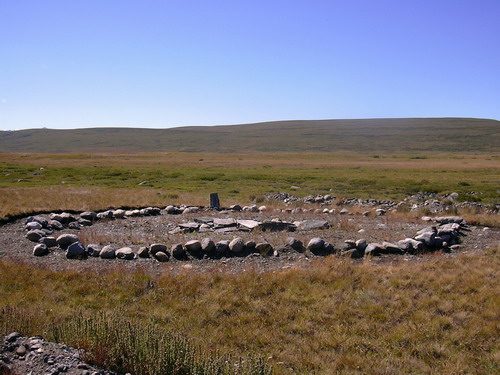
The mound rises out of the Uyuk Valley in Tyva, southern Siberia, roughly 460 feet across — a hill built by human hands from larch logs and clay, then buried under thousands of tons of stone. Inside its central chamber, a research team led by archaeologist Gino Caspari of the University of Bern and the Max Planck Institute of Geoanthropology found the burials of high-ranking Scythians, the horse-riding, gold-working nomads who ruled the Eurasian steppe in the first millennium BC. Scattered with the burials were more than 1,400 cannabis seeds.

The seeds alone would only show the plant was present. The proof of use came from the dead themselves. Laboratory analysis of hair braids taken from several bodies in the central chamber found chemical signatures consistent with THC, the psychoactive compound in cannabis, along with traces of cannabinol. The human body locks THC-related molecules into growing hair — the same principle behind a modern hair-follicle drug test — and in this frozen tomb, that record survived about 2,800 years. The burials date to the early 8th century BC.
The study, published in the journal Science and reported by Reuters on November 5, describes an elite ritual world: Scythian animal-style art, unusual gold objects, and the apparent sacrifice of dozens of horses — and probably people — on the mound's surface. It closely matches the account of Scythian royal funerals written by the Greek historian Herodotus in the 5th century BC, descriptions scholars long suspected were exaggeration or invention.
The seeds are preserved well enough that genetic sequencing has begun; the team calls it the oldest cannabis DNA currently known, with the potential to partly rewrite the history of how the plant was domesticated. The researchers are careful about the limits: hair can prove consumption, but not how the cannabis was taken. What it settles is older speculation — earlier finds elsewhere showed burned seeds and implements. This tomb shows the drug in the body itself.