Gone 53 Years: What Would Prove Frank ‘Black Caesar’ Matthews Is Still Alive?
Frank Matthews walked away from a Brooklyn federal case in 1973 with his girlfriend and millions in cash, and no authority has verified a single trace of him since. The question is no longer where he went — it is what proof, at this point, could settle whether he is alive at all.
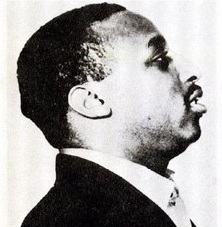
CASE FILE — Subject: Frank Larry Matthews, known on the street and in the federal files as “Black Caesar.” Born February 13, 1944, in Durham, North Carolina. Charged with six counts of tax evasion and conspiracy to distribute heroin and cocaine — indicted, never tried, never convicted. Last confirmed trace: the summer of 1973, when he failed to appear in federal court in Brooklyn; the final near-miss came weeks later at a North Carolina bank. Status: never found. No verified sighting since 1973, no body, no death record. If he is alive, he is 82 years old.

Fifty-three years after Frank Matthews disappeared, his file may be the largest collection of nothing in American law enforcement. The Drug Enforcement Administration ranked him among the most significant traffickers in the nation’s history, and the hunt for him ran for decades across continents, behind a reward not seen since the Dillinger era. What it produced, in the end, was an absence: no fingerprint hit, no bank slip, no informant paid, no grave. T.W.A. News reviewed the public record of this case — the standard histories, the trial of his organization, the accounts of the men who hunted him — and the honest summary is this: the evidence cannot currently prove Frank Matthews dead, and it cannot prove him alive. What it can do is show exactly what proof would look like, and why none of it has ever surfaced.
Matthews was raised in Durham by an aunt after his mother died when he was four. He dropped out of school in the seventh grade, served a year in a state reformatory for assault, and worked the numbers rackets in Philadelphia and then out of a barbershop in Brooklyn’s Bedford-Stuyvesant. In 1965 he moved into heroin, in a market the Italian Mafia controlled. He asked his way in — he got audiences with the Gambino and Bonanno families — and was rejected. So he built around them. Through Harlem numbers operator Raymond Marquez he reached Roland Gonzalez, a Cuban-American dealer who fled to Venezuela in 1969 and, working with Corsican suppliers, fed Matthews heroin and cocaine sourced from Caracas, Venezuela and Marseille, France — the same Corsican pipeline that had powered the French Connection. Staffed by Black and Latino underbosses, the organization grew to distribute across 21 states, and in 1971 Matthews convened a summit of major traffickers in Atlanta to coordinate taking control of international shipments — cutting the Mafia out as middlemen altogether.
It is important to be plain about what that organization was. Its product poured into the heroin epidemic that was hollowing out Harlem and the other neighborhoods down its distribution map. In Brooklyn, cutting mills diluted and bagged the drugs — one, on Prospect Place, was known as the Ponderosa, and another worked behind steel-reinforced walls where dozens of workers bagged heroin and cocaine in shifts. Investigators estimated that in 1969 and 1970 alone the network moved 100 to 150 kilograms of heroin into New York, and that a single gang buying from Matthews could sell some 17,500 bags a day to as many as 10,000 retail customers. The violence traveled with the product: in Philadelphia, the Black Mafia killed three of Matthews’s lieutenants in a turf war, and the shooting that killed his top man in that city wounded 20 bystanders. Whatever legend later attached itself to the man, the business was measured in addiction and funerals.
The case against him began, improbably, with a neighbor. NYPD detective Joe Kowalski lived in the same Brooklyn building and started logging the luxury cars and the visitors carrying paper bags; his license-plate checks kept landing on known dealers in other cities. A wiretap authorized in June 1972 mapped the machinery, including airline stewardesses paid about $1,000 a month to carry heroin in flight bags through airports. In November 1972 a key supplier, George Ramos, was arrested and testified before a federal grand jury. Prosecutors in Brooklyn swore out a warrant that December, and in the first days of January 1973 federal agents arrested Matthews at McCarran airport in Las Vegas as he prepared to board a flight to Los Angeles. One of the agents later recalled that Matthews, seeing them, asked: “What took you guys so long?”
A Las Vegas magistrate set bail at $5 million — at the time the highest figure in American history — because prosecutors said plainly that the defendant would run. He did not get the chance for four months. In April 1973, in New York, Judge Anthony J. Travia reduced the bail to $325,000 over the government’s flight-risk objections. Friends and relatives backed the bond with real estate; the largest signer put up his Durham garage business. Matthews was released on April 9, 1973. After he vanished, people close to the investigation told The New York Times that he had reimbursed in full everyone who had posted collateral for him — a detail that reads less like panic than like a man settling his accounts ahead of a planned departure.
For a few weeks he moved openly, spotted among big-time dealers at a Harlem gambling house. Then, in late June, he was gone. On July 2, 1973, he failed to appear in federal court in Brooklyn to answer a superseding indictment; Judge Travia issued a bench warrant the following day. Matthews left with his girlfriend, Cheryl Denise Brown, and, authorities believed, as much as $20 million in laundered cash. A friend reported that the couple had taken a flight to Houston. About a month later, IRS agents chasing a tip walked into a bank in North Carolina a step behind him. “Oh, you just missed him,” the manager told them, in an exchange retold in accounts of this case ever since. It remains the last confirmed trace of Frank Matthews — and of Cheryl Denise Brown.
The newly formed DEA put up a $20,000 reward in 1974 — its largest since the bounty on John Dillinger in 1931 — and in later years raised the money and commissioned forensic sculptor Frank Bender to model how Matthews might look after 27 years on the run. Tips and claimed sightings arrived from Nigeria, Rome, the Bahamas and Bonaire, and from Chicago, Philadelphia, Atlanta and Pittsburgh; agents checked them and verified none. The prosecution of the organization proceeded headless: a federal grand jury indicted 18 members in February 1975, forty witnesses testified at the trial that followed, and eight defendants were convicted — one conviction, that of Barbara Hinton, the mother of Matthews’s children, was later reversed by the Second Circuit on a grand-jury ground. Lew Rice, who headed DEA offices in Philadelphia and then New York, reopened the file in the 1990s and stated the agency’s position in one sentence: “We will never close the case.”
So audit the alive side of the ledger. There is no body — not Matthews’s, and not Brown’s. His fingerprints are on file with the federal government, and in 53 years they have never surfaced: no arrest print, no license print, no border print, no morgue print. No contact with his family has ever been recorded; federal agents who interviewed Hinton concluded that she did not know where he had gone, and investigators found no sign that he had provided for the three children he left behind. The reward — real money, on the table for decades — was never collected, though informants have sold out formidable men for less. And the exit itself was engineered rather than improvised: the collateral was repaid, and by the Task Force’s estimate he had been moving at least $1 million a month into offshore savings in his final period of freedom. A man who prepared that carefully, holding that much cash, had the means to disappear permanently.
Now audit the other side, because the case for his death is built from the same silence. Fifty-three years without one verified trace is an extraordinary run for a man every account describes as flamboyant — the mink coat, the Rolls-Royce, the front-row seats at the Garden. Brown’s silence cuts the same way: by the record she was close to her parents, and no evidence has ever surfaced that she contacted them even once; an investigator on the case reasoned from that silence that she is likely no longer alive. A former U.S. Marshals Service agent who handled the Matthews file believes he is dead. Ron Chepesiuk, the journalist whose years of research produced the most complete modern account of the case, reached the same conclusion — likely dead, fate unknowable. The rival theories, that he was murdered by underworld rivals or died somewhere in Venezuela or the Caribbean, are labeled here for what they are: theories, unsupported by a body, a witness or a document.
Which leaves the question this investigation set out to answer: what would proof look like now? The list is short, and every item on it is a record, not a story. A fingerprint match — the prints taken from Matthews sit in federal files, and one hit, from an arrest, a licensing office, a border post or an unidentified body anywhere, would end the argument in an afternoon. A DNA identification — unidentified-remains databases hold thousands of John Does recovered across the decades and the very regions the sightings named, and a family reference sample could put a name to one. A death record under an alias, tied to him by prints or DNA rather than by a matching name. A financial event — the laundered millions moving, surfacing in a dormant account, an estate or a seizure. Or Brown herself: if she lives, she is in her seventies, and she is the one living person who certainly knows. Short of one of those, another sighting changes nothing. There have been dozens of sightings. The verified count is zero.
Even the documentary record is incomplete: when Chepesiuk went looking for the file of the 1975 trial — forty witnesses, the government’s entire case against the organization — the National Archives searched and could not locate the records. That is where the matter rests in October 2026. Reports that spread online in late 2025 claimed federal authorities had formally ended the search for Frank Matthews; this desk could find no statement from the DEA, the Justice Department or the U.S. Marshals Service confirming any closure, and the reference record still carries his federal arrest warrant as outstanding — so this newsroom is reporting the case the way the evidence supports: open. Frank Matthews was charged with running one of the largest drug organizations in American history, and the harm it did to the neighborhoods it fed on is documented and real. He was also never tried, and whether he is an 82-year-old man living under another name or a set of unrecovered bones is, today, unproven in both directions. This tracker will follow any official change in the case’s status — a warrant withdrawn, a death declared, a fingerprint matched — and report it when the record, not the legend, says so.